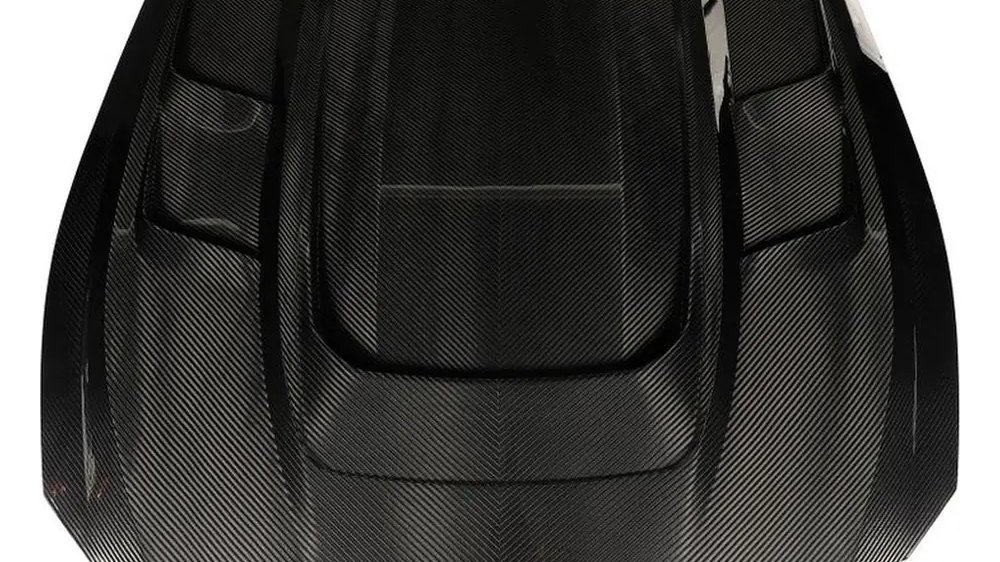
Yeedercar · Foshan, Guangdong · Body panels
The hood is the largest single panel you can bolt on and off a car. It sits at the highest point, it opens most days, and on most cars it is still steel. That is the whole reason it is the panel people change.
Part one
Steel or carbon, and what actually changes
The factory hood
Pressed steel, or aluminium on some cars. Cheap to make, easy to repair, and it usually carries the washer jets, the latch and the hinges.
Leave it out in the weather and the leading edge picks up stone chips. A steel hood is also real weight sitting high and forward, which is the worst place to carry it.
A carbon hood
Layered carbon under a clear coat, moulded from your car’s own panel dimensions so the shut lines land where the factory ones do.
It drops the weight and it will not rust. It is not a crash panel — nothing here is claimed to be stronger than steel in an impact.
Weight is the honest reason. Taking a few kilos off the top of the car lowers the centre of gravity and makes the front end do less work turning in, and you feel that long before you notice the look. The second reason is heat: a vented carbon hood gives the engine bay somewhere to send hot air, which matters on track days and in traffic with a turbo.
What it does not do is change the way the car drives in any other sense. It bolts to the factory hinges, the latch and the struts transfer across, no cutting, and if you keep the steel panel the car goes back to standard in an afternoon.
| The factory hood | A carbon hood | |
|---|---|---|
| Material | Pressed steel, or aluminium on some cars | Hand-laid carbon under a clear coat |
| Weight | Heavy, and at the highest point of the car | A fraction of the steel panel |
| Weather | Chips, then rust at the edges | No rust; the clear coat is what ages, and it can be redone |
| Fitting | Factory hinges and latch | The same hinges, latch and struts — about 60 to 90 minutes, two people |
| Safety | Crash-tested with the car | Not a crash panel; track cars still run hood pins |
Part two
The four ways a carbon hood is built
Two hoods can look identical in a photo and be different parts. When you order one, these are the four decisions, and the price moves with them.
By shape
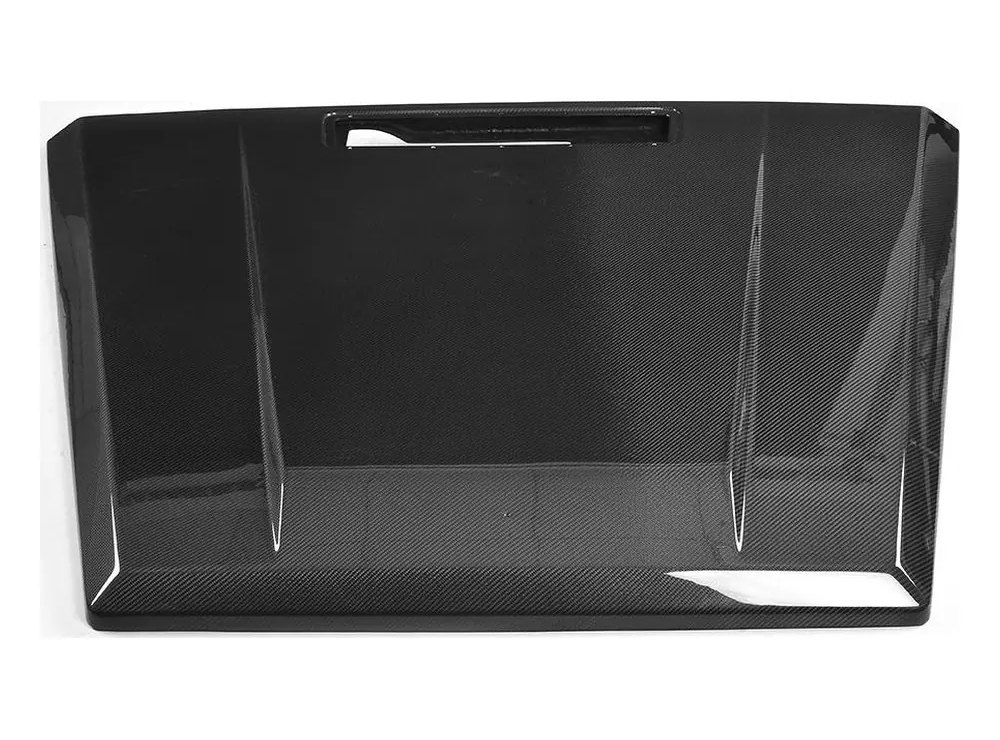
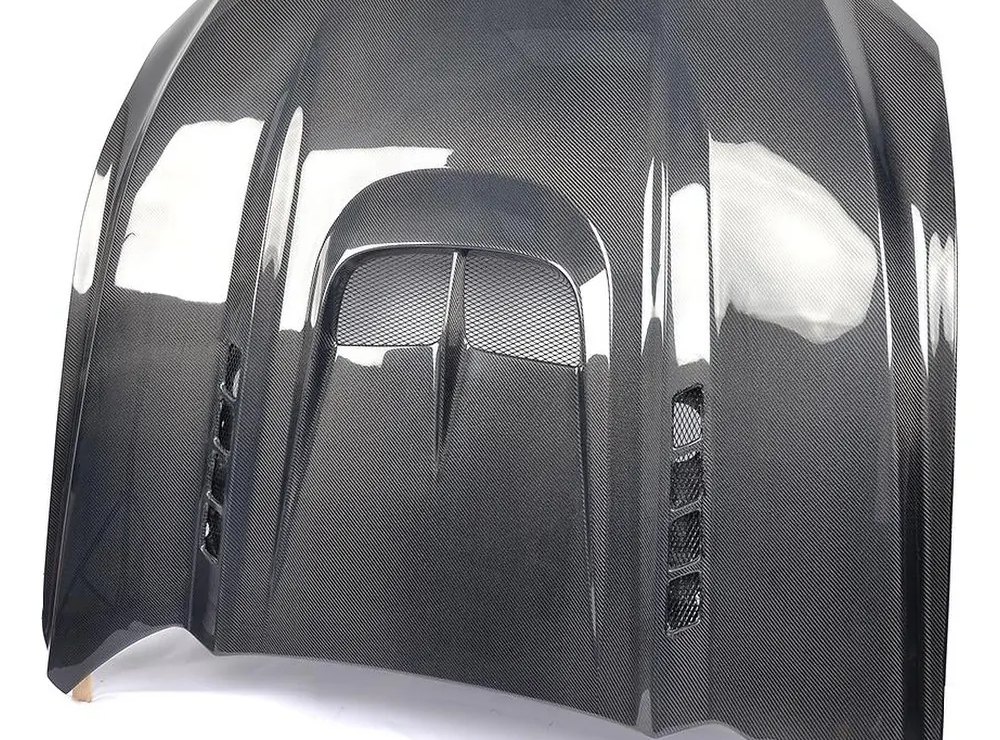
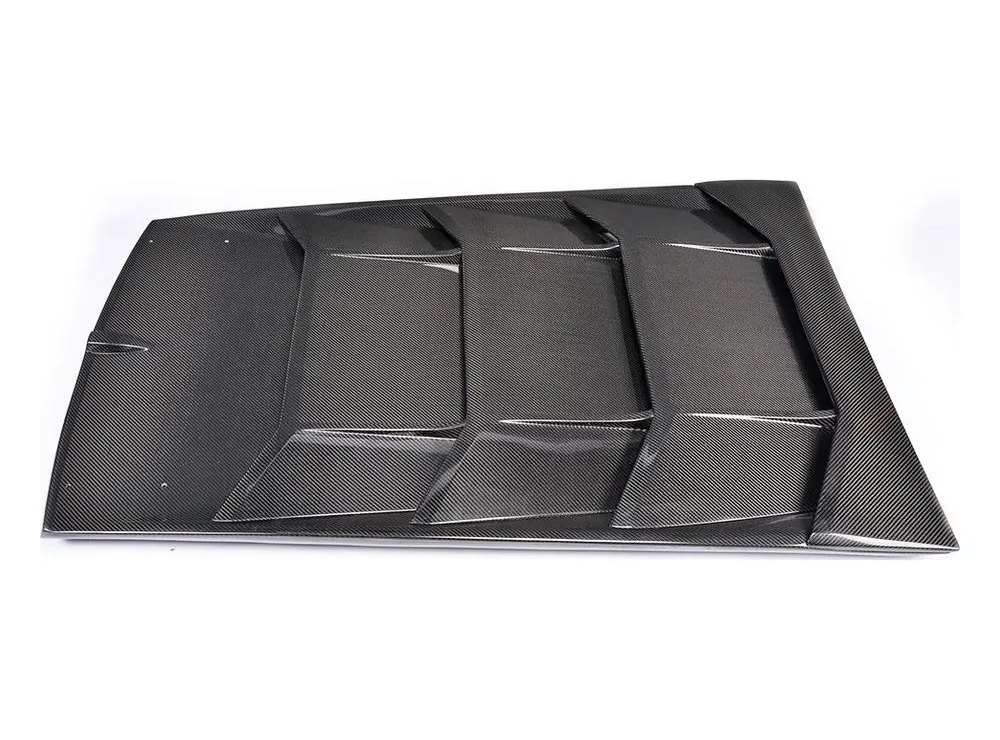
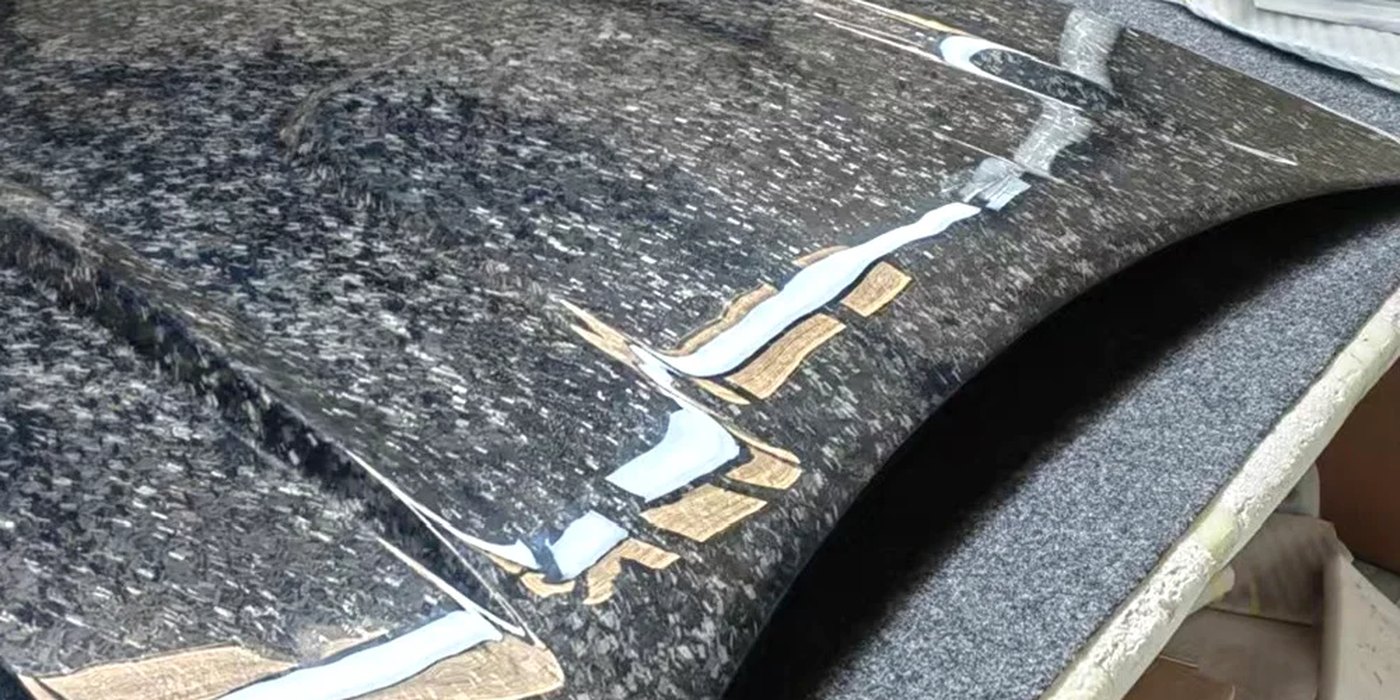
By weave. The default is 3K 2×2 twill, the diagonal pattern you picture when you hear carbon fibre. 6K twill and plain weave are both available, and carbon-kevlar hybrid cloth gives a panel that flashes gold-green in the light instead of grey. Forged carbon is the odd one out: short strands pressed into a mould, so it looks like dark marble rather than a woven sheet.
By surface. Gloss clear coat is standard, and it is what shows the weave off best. Satin and matte cut the reflection down if you do not want the panel to look wet all the time. A tinted clear coat — red, blue or yellow — keeps the weave visible but shifts the whole panel toward a colour, which is the finish people ask for when the car is wrapped or painted to a theme.
By how it attaches. Almost everything we make is a bolt-on replacement: factory hinges, factory latch, and the struts transfer from your original panel. A pin-on hood is the other option for a dedicated track car, held down by four hood pins with no latch at all. If your car holds its hood up with a prop rod rather than gas struts, that prop position is worth checking before you order.
Part three
What we make them for
Forty hoods are in stock right now, across sixteen makes. Prices run from $585 to $1710, and the spread follows the car rather than the carbon — a bigger mould with fewer buyers costs more to keep alive, which is why a Ferrari 458 hood and a Mercedes G-Class hood sit at the top and a Tesla Model Y hood sits at the bottom.
- Mercedes-Benz
- BMW
- Audi
- Volkswagen
- Ford
- Chevrolet
- Cadillac
- Tesla
- Land Rover
- Nissan
- Honda
- Kia
- Maserati
- Alfa Romeo
- Ferrari
- Lamborghini
Four of the smaller ones, as they sit on the shelf:
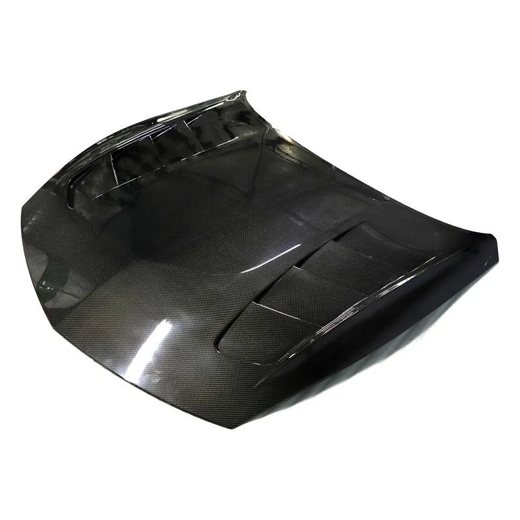 Nissan 400Z2023
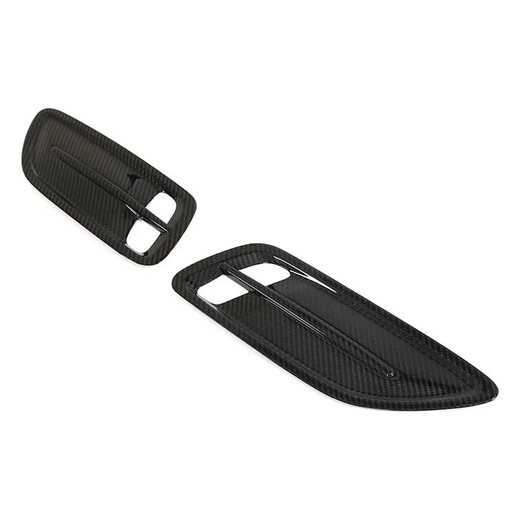 Kia Stinger2018
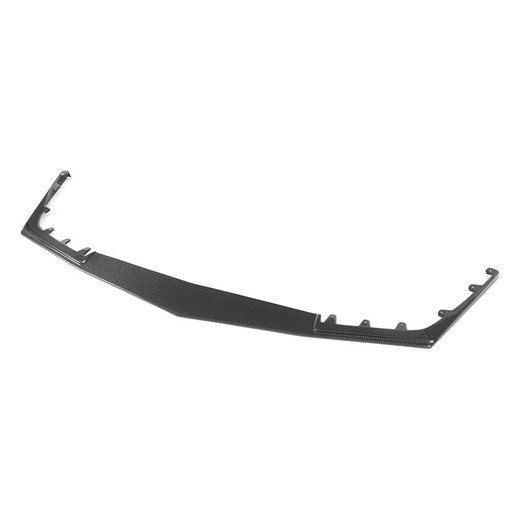 Cadillac CTS-V2013
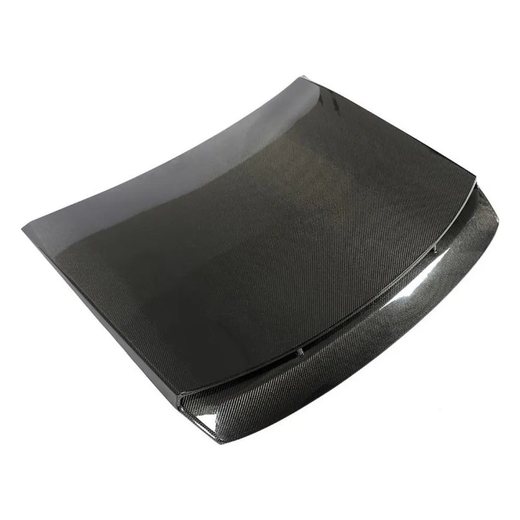 Range Rover Evoque2020–21
Every hood is made to order in Foshan and ships in about ten to fifteen working days, with a twelve-month warranty against manufacturing defects.
Part four
Ordering one that is not on the shelf
Most of what leaves the shop is not a stock configuration. We can spray a tinted clear coat in a colour you name, lay the panel in a weave or hybrid cloth that is not the default, and add logo application or badge cut-outs. If your car is not in the list at all, that is not a no — send a photo and the dimensions and we will quote a new mould.
And if you would rather not spec it yourself, send us the car and the look you want and our own designers will draw the panel for you — vents, weave and finish — before anything is laid up.
Every photo on this page is ours, shot in the workshop — no supplier renders. See every carbon fiber hood →