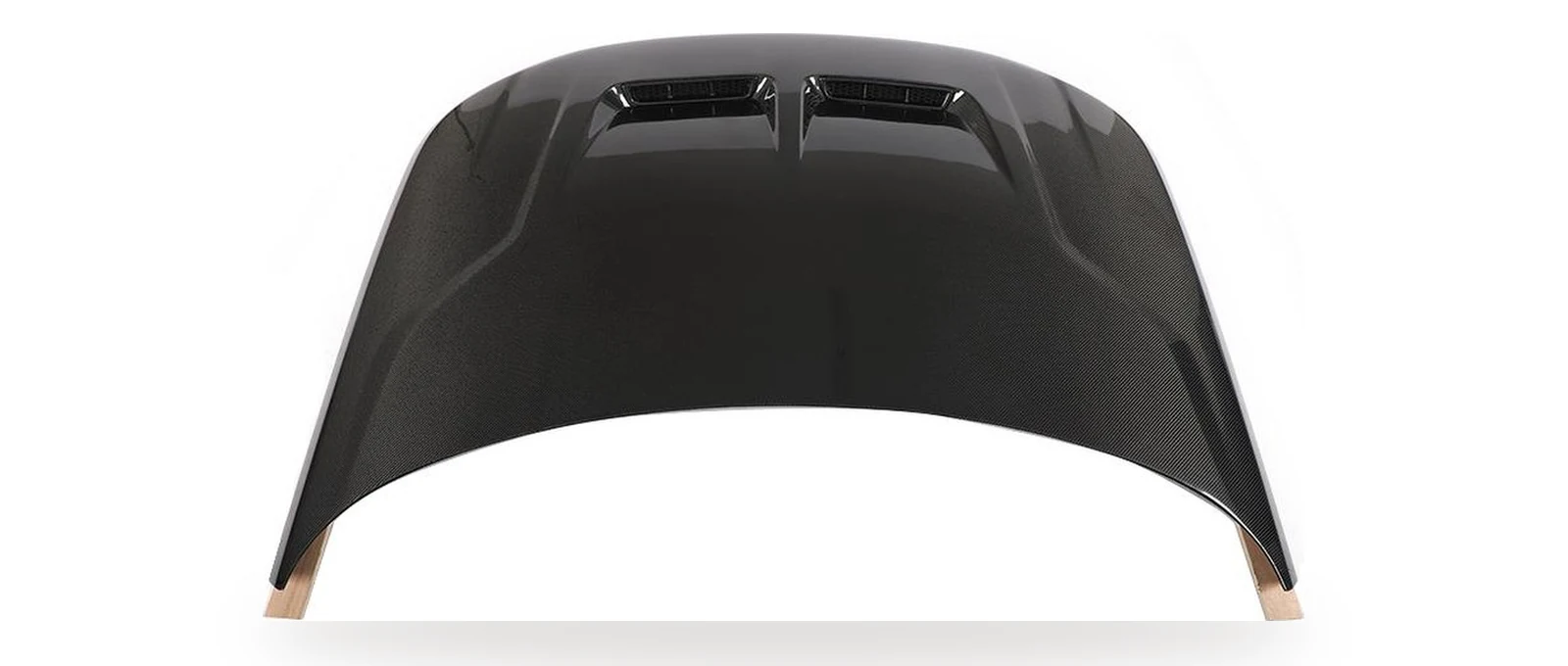
Carbon Fiber Hood for Range Rover Sport L494 (2018-2020): Weight, Vents & Fitment Guide
The bonnet is the largest single panel on the front of a Range Rover Sport, and on the L494 it sets the tone for everything behind it. Swapping the factory panel for a vented carbon fiber hood changes three things at once: the mass sitting over the front axle, the way heat leaves the engine bay, and how the whole nose reads. This guide covers what actually changes on a 2018-2020 L494, how the fitment works, what the install takes and what it costs.
In this guide
- Why the hood is the panel worth changing on an L494
- Factory hood vs carbon fiber: weight, vents, finish, fitment, price
- What the twin vents actually do — and what they do not
- Fitment on the 2018-2020 Range Rover Sport, hinges and latch
- Install steps, panel care and the real cost comparison
Why the Hood Is the Panel Worth Changing
The hood is the largest painted surface you see from the driver’s seat, and from the pavement it dominates the whole front three-quarter view. A body-colour hood disappears into the car. A gloss carbon hood does the opposite — it separates the front end from the rest of the body and tells you the car is modified before you have looked at the wheels.
Weight is the second half of the argument. Every kilo of a hood sits over the front axle, and it is one of the few panels you can pull mass from without touching the interior, the suspension or the brakes. On an SUV this size, a lighter hood is one of the few front-end changes that shows up both on the scales and in how the nose reacts on turn-in.
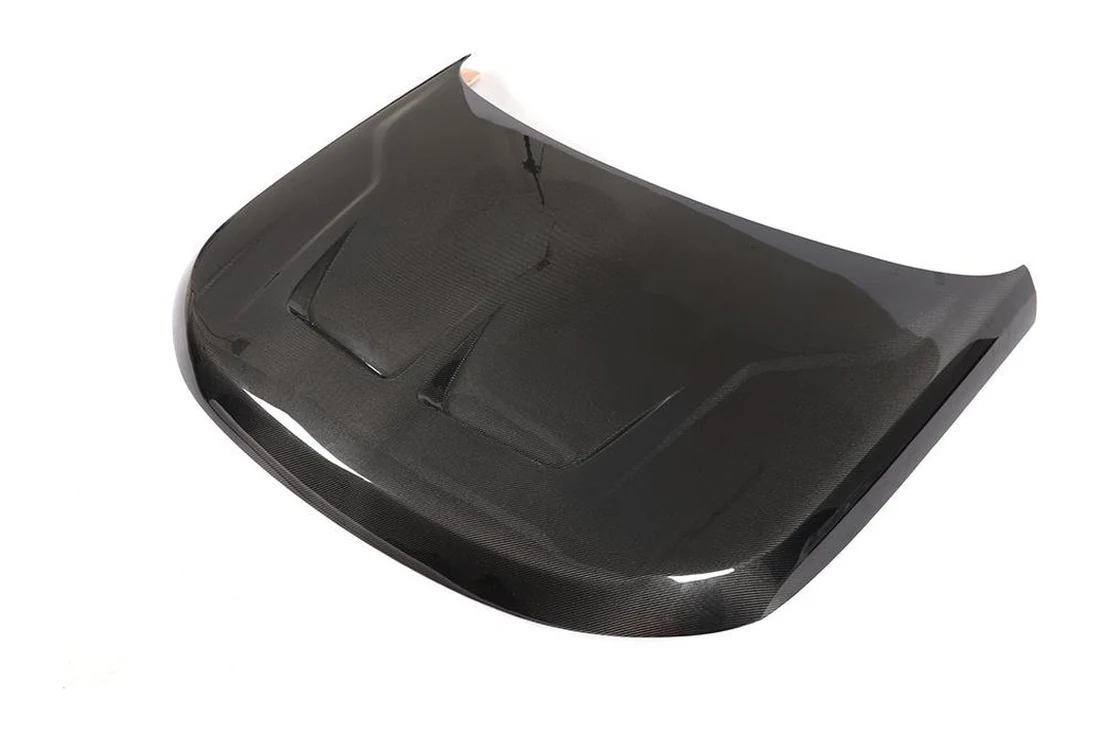
The one-piece carbon panel sits on the factory hinges and latch — no cutting and no drilling.
Factory Hood vs Carbon Fiber Hood
Both panels bolt to the same car. What they do for it is completely different.
| Factory metal hood | Carbon fiber hood | |
|---|---|---|
| Material | Factory metal panel, primed and painted to match | Hand-laid carbon fiber, finished with a UV-stable clear coat |
| Weight | Mass carried over the front axle | Markedly lighter panel, easier to lift and fit |
| Vents | None, or a cosmetic applique | Two functional vents moulded into the panel |
| Heat | Heat soaks under a closed hood | Vents give hot air a path out of the engine bay |
| Finish | Painted to match the body | Gloss carbon weave, no paint required |
| Fitment | OEM | Factory hinges and latch, original mounting points |
| Price | OEM panel plus paint and labour | $715 factory direct |
What the Twin Vents Actually Do
The two vents sit either side of the centreline with mesh-backed openings. Under a closed hood, hot air has nowhere to go at low speed: it soaks into the intake plumbing, the wiring and every plastic clip in the bay. The vents give that hot air a way out instead.
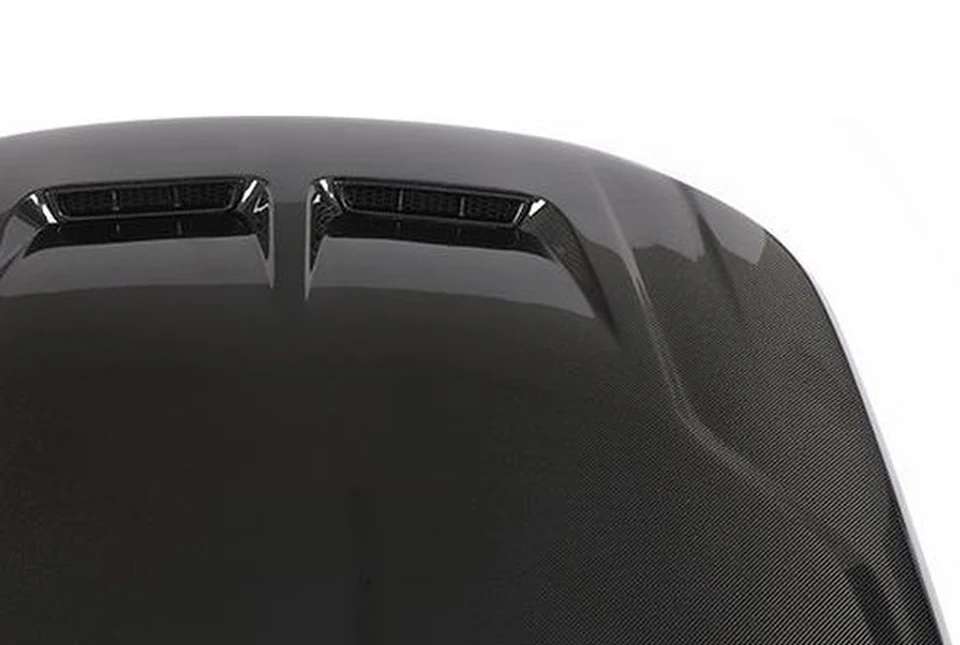
Twin mesh-backed vents, moulded into the panel rather than cut in afterwards.
To be straight about it: vents are a heat-management and appearance upgrade, not a horsepower modification. What they change is how quickly the bay sheds heat when you stop — and how the front of the car looks while it does.
Fitment: Range Rover Sport L494, 2018-2020
This hood is shaped for the Land Rover Range Rover Sport L494 Utility 4-door built between 2018 and 2020. It is a replacement panel rather than a conversion: the factory hinges and latch do the work, and the original mounting points are reused.
- No cutting, no drilling: the panel bolts to the factory hinges and drops onto the original latch.
- Two pairs of hands: the hood is light for its size, but it is wide. One person on each side is the safe way to lift it on and off.
- Panel gaps: have the alignment checked before the final tighten — a few millimetres of hinge adjustment is the difference between factory shut lines and a gap you will notice forever.
- Model year and trim: bumper and lamp design changed across the L494 run, so compare the photos with your own car before you order.
Measure Before You Order
Our panel measures around 181.4 cm wide by 144.2 cm front to back (71.4 in x 56.8 in) at its widest points. Take two minutes with a tape measure across your own hood and front to back before ordering — it is far cheaper than shipping a hood back across the world.
Fitting the Hood: What the Job Involves
- Open the hood and mark the hinge positions with tape so you have a reference for the new panel, then disconnect the battery if you will be working near wiring.
- Support the hood and hand the other side to a second person — a wide panel is awkward long before it is heavy.
- Unbolt the hood from the hinges, lift it clear and set it down on a soft blanket.
- Lower the new hood onto the hinges with help, and fit the bolts finger-tight only.
- Close it slowly and check the gaps and the latch engagement, adjusting the hinge position before anything is torqued down.
- Torque the hinge bolts, confirm the latch catches cleanly, and check that the panel sits flush along both front wings.
Living With a Gloss Carbon Hood
- Wash with a pH-neutral shampoo and a soft mitt, and rinse at low pressure.
- Keep abrasive polishes and cutting compounds away from the clear coat.
- Do not hold a pressure washer against the edges, where the coating is thinnest.
- Clear tree sap, bird droppings and road salt early — a UV-stable clear coat protects the weave, but it is not armour.
- A spray sealant once a season keeps the weave crisp and makes bug removal a two-minute job.
- Watch the ceiling: the hood arcs higher than the factory panel when it is fully open.
Cost: Carbon Hood vs Replacing the Factory Panel
If the car is staying stock, the factory panel is the sensible answer. If the front end is going to change at all — hood, grille, splitter — this is the panel that changes the car most for the money.
| Carbon fiber hood | Factory replacement hood | |
|---|---|---|
| Parts | $715, made to order | OEM panel price plus freight |
| Paint | None — gloss carbon, clear-coated | Primed, colour-matched and blended into the wings |
| Fitting | An afternoon, two people, hand tools | Body shop time for paint and fitting |
| Heat | Twin vents shed engine bay heat | Closed panel, heat stays in |
| Result | Gloss carbon weave and vents | Exactly how it left the factory |
| Lead time | 10-15 business days in production | Dealer and paint shop schedules |
Why Owners Buy This Hood From Us
- Factory direct: the hood is laid up in our own workshop to order, so the price does not carry an importer’s margin.
- Real carbon fiber: genuine carbon weave under a UV-stable clear coat, not a hydro-dipped or printed finish.
- Shape matched to the factory panel: factory hinges, factory latch, no modification to your car.
- Checked before dispatch: every panel is inspected before it is packed; shipping is tracked and insured.
- 12-month warranty against manufacturing defects, with after-sales support if the fit is not what you expected.
FAQ
Will it fit my Range Rover Sport?
It is shaped for the Range Rover Sport L494 Utility 4-door built between 2018 and 2020. Trim level and model year change the front end on these cars, so compare the photos with your own hood — or send us a photo with your year and trim and we will confirm before production starts.
Is the carbon fiber real?
Yes. It is real carbon fiber with a UV-stable clear coat, not a hydro-dipped or printed finish.
Do I need to cut or modify the car?
No. The hood bolts to the factory hinges and latch and reuses the original mounting points.
Can I fit it myself?
It is a two-person job — the panel is light but wide. Budget an afternoon and have the panel gaps checked before the final tighten.
How long does delivery take?
Each hood is made to order, so allow 10-15 business days for production before it ships worldwide with tracking.
Vented or non-vented?
This is the vented version with the twin vents shown in the photos. Some models are offered both ways, so match the images to your car or ask us to confirm.
What if something is wrong when it arrives?
Every hood is inspected before dispatch and covered by a 12-month warranty against manufacturing defects. Send us photos and we will sort it out.
Give the L494 a Carbon Hood
Shop the vented gloss carbon hood for the 2018-2020 Range Rover Sport, or send us your year and trim and we will confirm the fitment first.
Shop the Carbon Fiber Hood — $715
All Carbon Fiber Hoods
Request Custom Fitment