
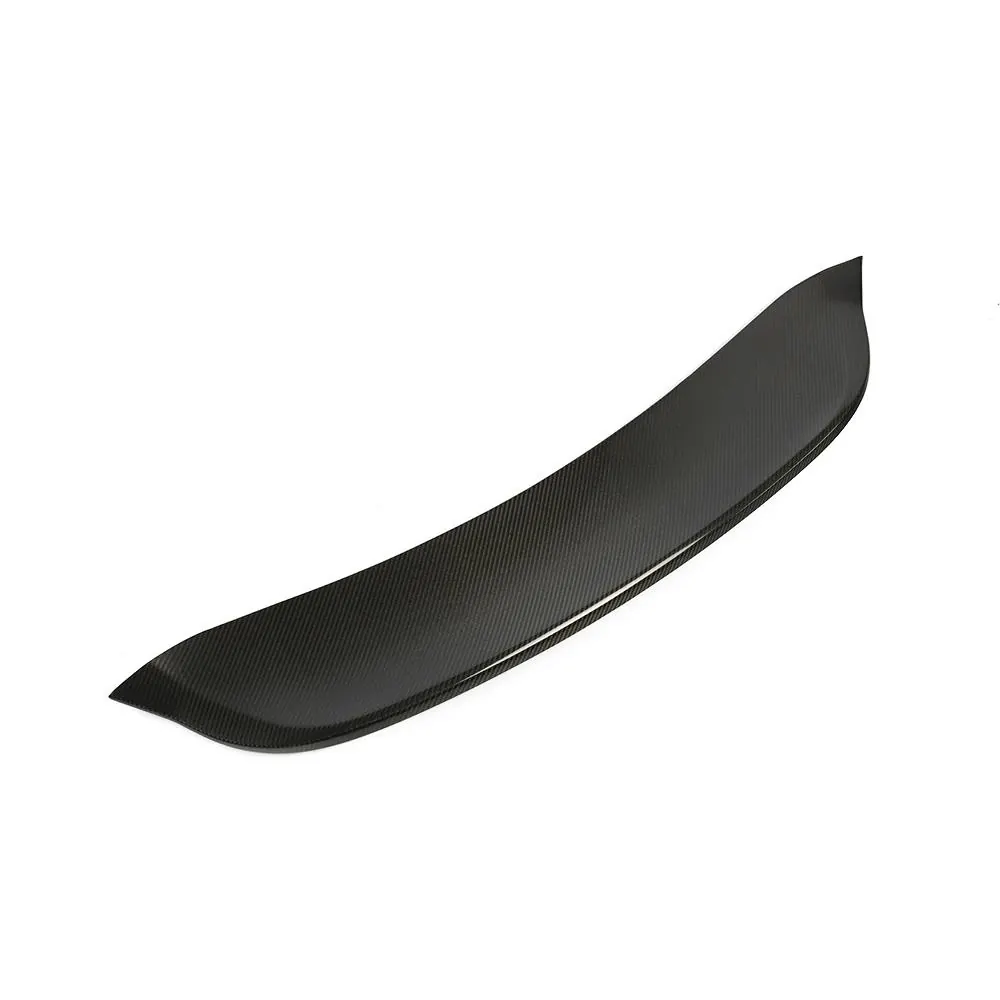
Yeedercar · Foshan, Guangdong · Rear end
We make 614 rear spoilers for thirty makes: a $95 lip for a 5 Series boot, a $2180 panel cut for a Panamera, and everything in between. A spoiler is one of the easiest parts on a car to buy and one of the easiest to buy wrong, so this is the part of the job that ends up being a phone call rather than a product page.
The boot decides, not the spoiler
Every spoiler here starts as tooling taken off an original panel. That is why the clips and bolt holes line up with the ones already on your car — the mould came off a factory part for that model, so the fixing points sit where the factory ones sit. When a spoiler lands wrong, it is almost never the wrong part. It is the wrong body style.
Sedan, coupe, estate and hatchback versions of one model have different boot lids: different curvature, different width at the trailing edge, sometimes different fixings. A 3 Series sedan and a 3 Series Touring are two different panels, and no amount of tape turns one into the other. If you are not certain which you have, send the year, the body style and a photo of your own boot, or the VIN, and we will confirm before anything is cut. Fitment questions are answered within a day.
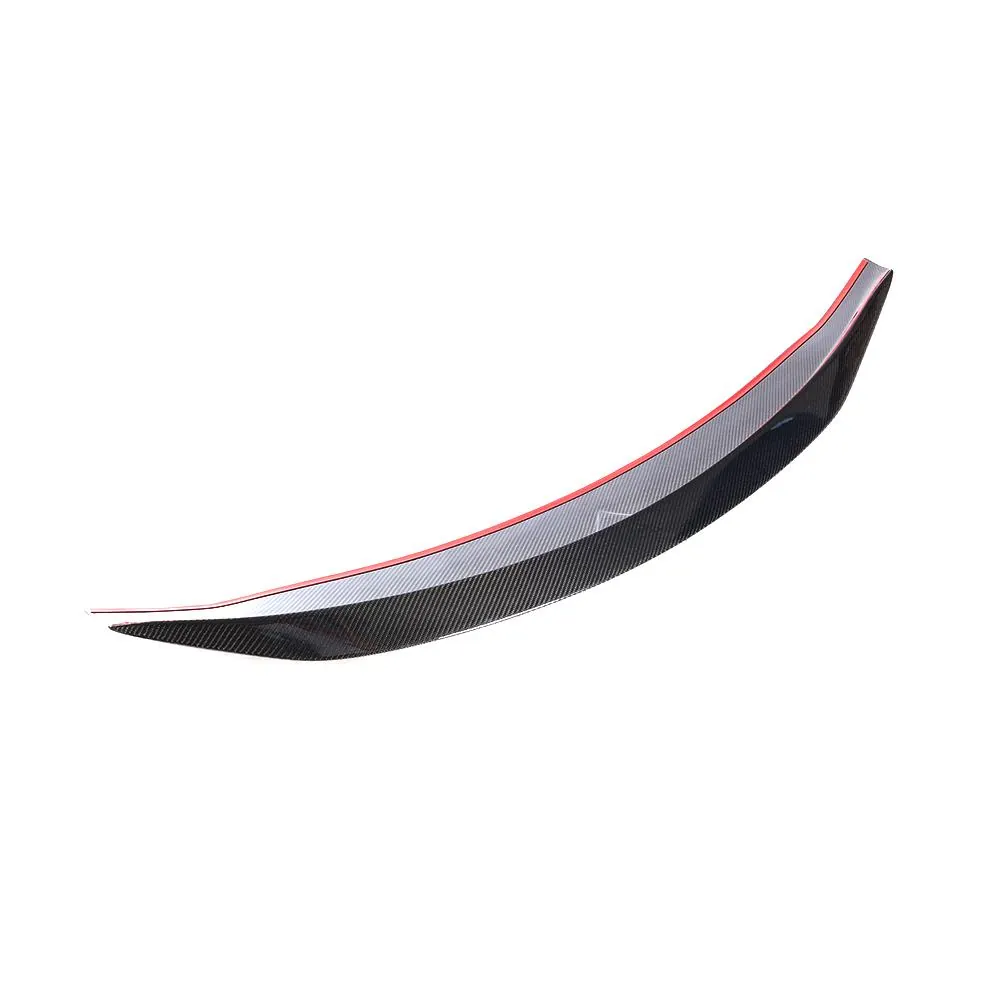
The underside matters as much as the top. It is moulded to the boot curvature of one specific car, so the tape line contacts the panel along its whole length instead of grabbing at the ends and floating in the middle. On a part that is only held on by adhesive, that is the whole game.
If we do not have the mould, we say so, and quote you a new one. We tool one-off panels regularly. What we will not do is send the nearest shape and let you find out at the tape line.
Fitting one is forty minutes on the drive
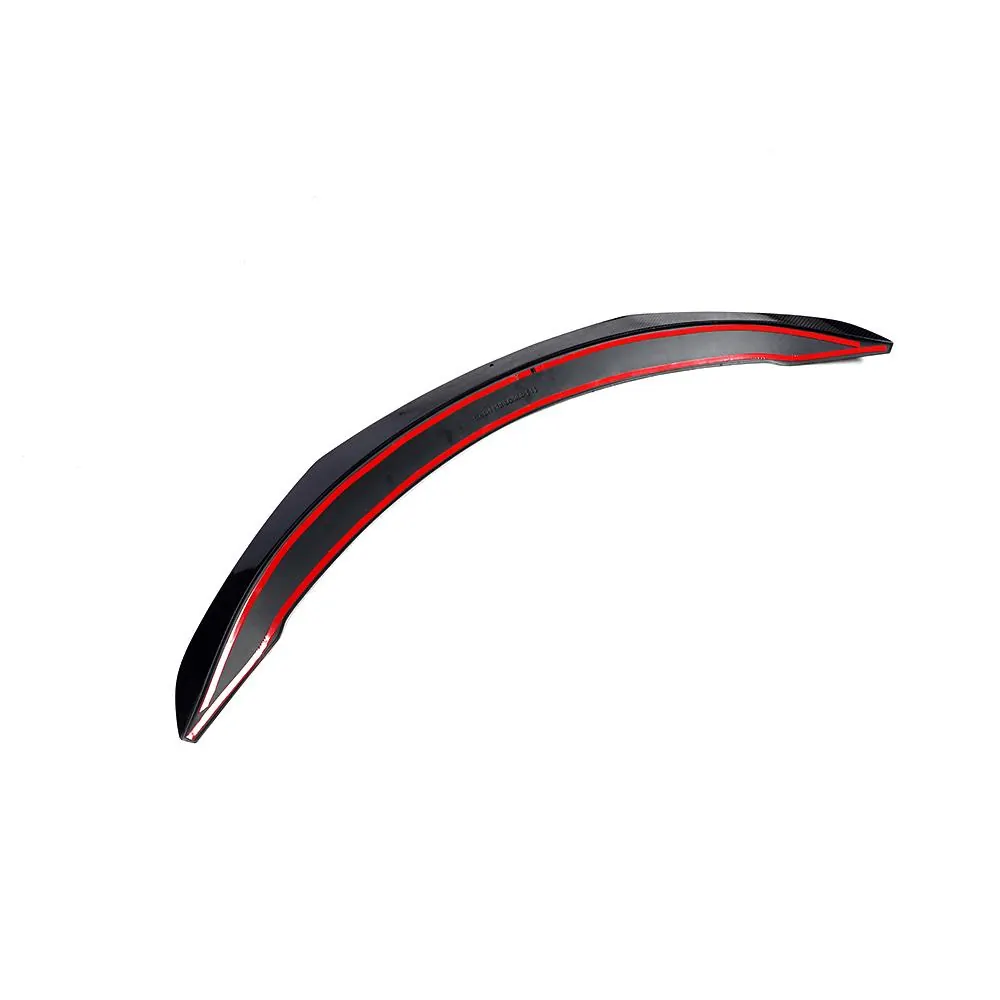
In the box: the spoiler with the tape already applied to the underside, an alcohol wipe and a fitment card. The tape being pre-applied is not packaging theatre. It is the part that decides whether the spoiler is still on the car in two years, and it is far easier to get right on a bench than crooked off a roll.
The job itself is ordinary. Warm the boot lid, wipe it down, dry-fit the spoiler first while the original hardware is still to one side so you can hold the two parts against each other, then peel and press along the length. Thirty to forty-five minutes with hand tools; a hairdryer makes the tape bite harder. Most cars need no drilling, because the factory fixings transfer across, and where the original part was bolted the holes are already positioned in the mould. Nothing gets welded or painted afterwards, and re-using the original fixings is why the car can go back to standard later.
The failure we see is the tape line, not the part. A previous spoiler or a strip of paint protection film leaves a residue line on the boot lid, and tape laid over that lifts at the ends within a season — usually at the first cold snap. Clean it back to paint before you fit anything. It is the least enjoyable hour of the job and it decides the result.
How one is made, and why it keeps its shape
Carbon fibre, laid up by hand, vacuum bagged, then cured in an autoclave before the clear coat goes on. The autoclave earns its place in the sentence: it is why the panel still sits flat on a hot day and does not sag after a track session. The clear coat is UV-stable, which is what stops a gloss panel going yellow in strong sun. It is not scratch-proof — treat it the way you would treat paint.
It is carbon, not a hydro-dipped or printed film, and you can tell by walking around the car: the weave should move as the light does.
Every unit is checked against a photo checklist before it is packed — pinholes, weave alignment, mounting-hole position, clear-coat flow. Four things, one part at a time, by eye. They are on the list because they are the four faults that turn up six months later if nobody looked.
Because the tooling is in-house, awkward requests are normal work rather than a favour: a non-standard weave, your logo laid under the clear coat, a short trim so a part clears a roll cage. A trader buying containers cannot do that. And when a customer wants volume, the same mould runs batches of fifty, two hundred or a thousand pieces.
Four shapes, and what each one is doing
A lip and a wing are not the same idea at different sizes, and it is worth knowing which of the two you are buying before you choose between them.
| Where it sits | How it is held | With us, today | |
|---|---|---|---|
| Boot lip | Along the boot edge, low, following the shut line | Pre-applied automotive tape, or the factory bolt holes; no drilling on most cars | 494 listings, $95–$2180, half of them around $300 |
| Roof blade | Top of the tailgate glass, working the air off the roof | The same tape method; underside moulded to the glass line | 98 listings, $150–$450 |
| Ducktail | Raised out of the boot skin itself | Tape, or bolts where the factory part came off | 18 listings, $150–$870 |
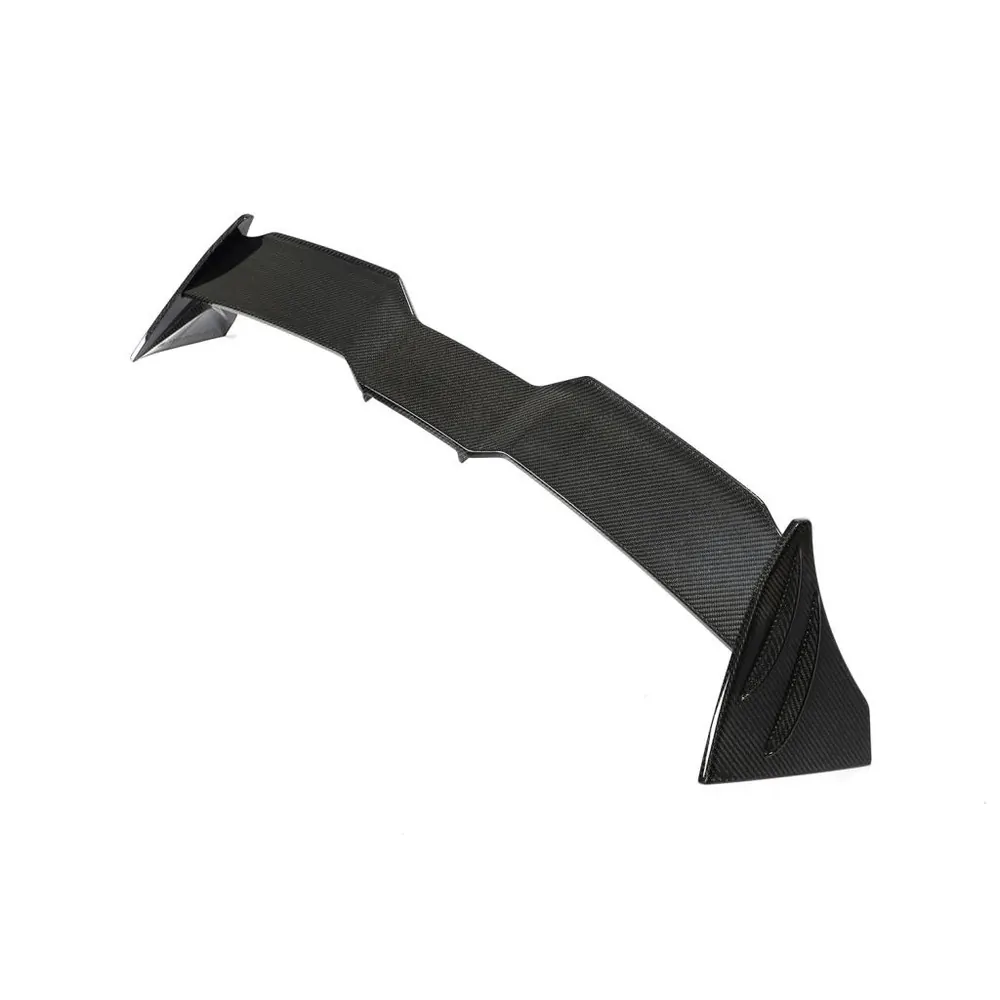
| Wing | Clear of the boot, on two uprights | Bolted through, and the load wants more than sheet metal underneath | 4 listings, $300–$1050 |
The honest version of the aero story: a lip or a ducktail tidies the trailing edge and adds a little rear stability at motorway speed, which we are comfortable claiming because that is what owners report back. A wing makes real downforce and brings real drag with it. We have not measured either in a wind tunnel, so we are not going to publish a number we invented.
Where a wing differs in kind is the load path. The downforce goes into whatever the uprights are bolted to. On some cars that is a structural panel; on others it is sheet metal that was never asked to carry anything, and that is worth a conversation before a drill comes out. And none of it makes the car safer: a spoiler is not a crash structure, and a nervous rear end is springs, dampers and tyres, not a panel on the boot.
What is on the shelf
614 spoilers in stock today, thirty makes, $95 to $2180, half of them around $300. The price tracks the car rather than the carbon: the same sheet of gloss twill costs a fraction as much on a 5 Series boot as on a Panamera panel, because one mould has paid for itself across hundreds of cars and the other is spread over a handful.
- Universal boot lip$180
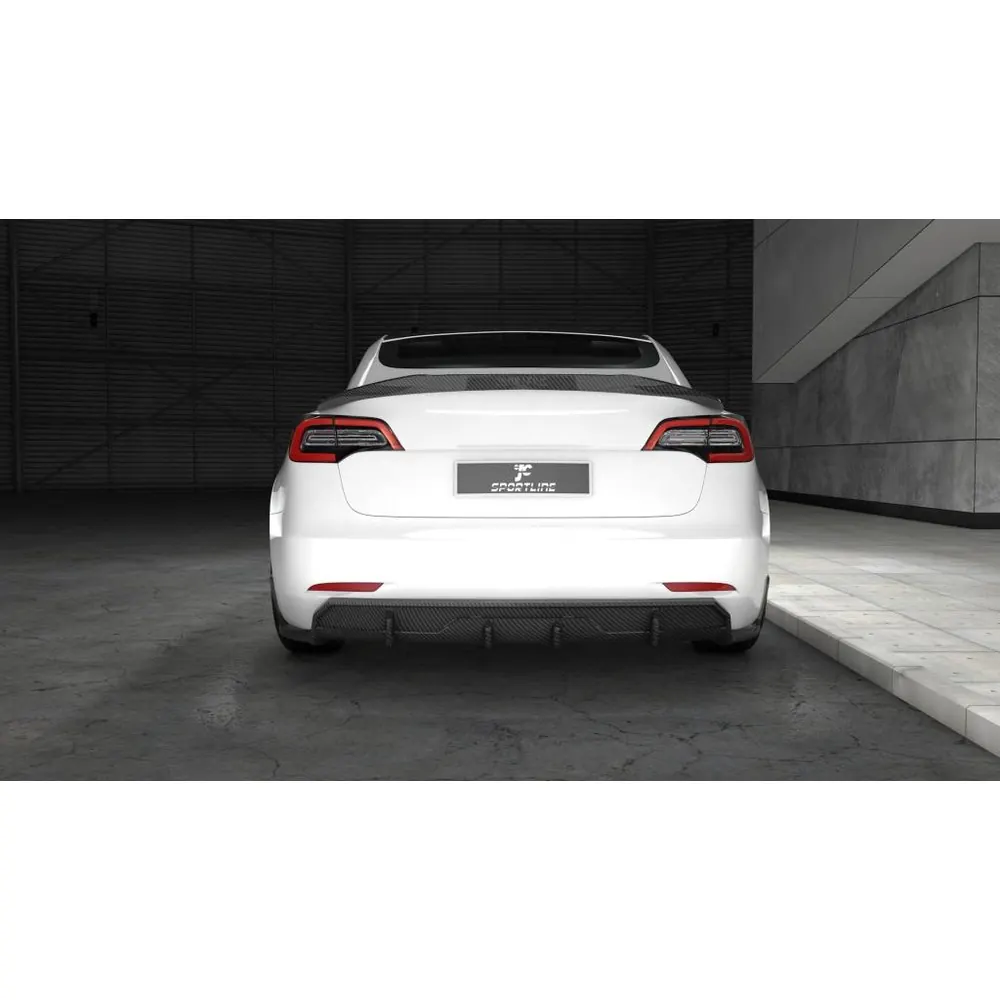
- Tesla Model 3, gloss lip$280
- Mercedes-AMG GT trunk spoiler$300
- VW Golf MK8 R roof blade$420
- Porsche 718 ducktail$870
- Ferrari 458 rear wing$1050
Nothing is pulled off a shelf. Each part is made after you order it, ten to fifteen business days in production and then transit with tracking. The twelve-month warranty covers manufacturing defects, which in practice means de-lamination and a lifting clear coat. It does not cover kerb damage, or a tape line that was laid over old residue.
Most of what leaves the shop goes to workshops, tuners and distributors who resell under their own label, to more than thirty countries. The makes on the shelf:
- BMW
- Mercedes-Benz
- Audi
- Volkswagen
- Toyota
- Tesla
- Porsche
- Ford
- Infiniti
- Maserati
- Honda
- Subaru
- Nissan
- Alfa Romeo
- Lexus
- Lamborghini
- Chevrolet
- Cadillac
- Bentley
- Mazda
- Ferrari
- McLaren
- Kia
- Land Rover
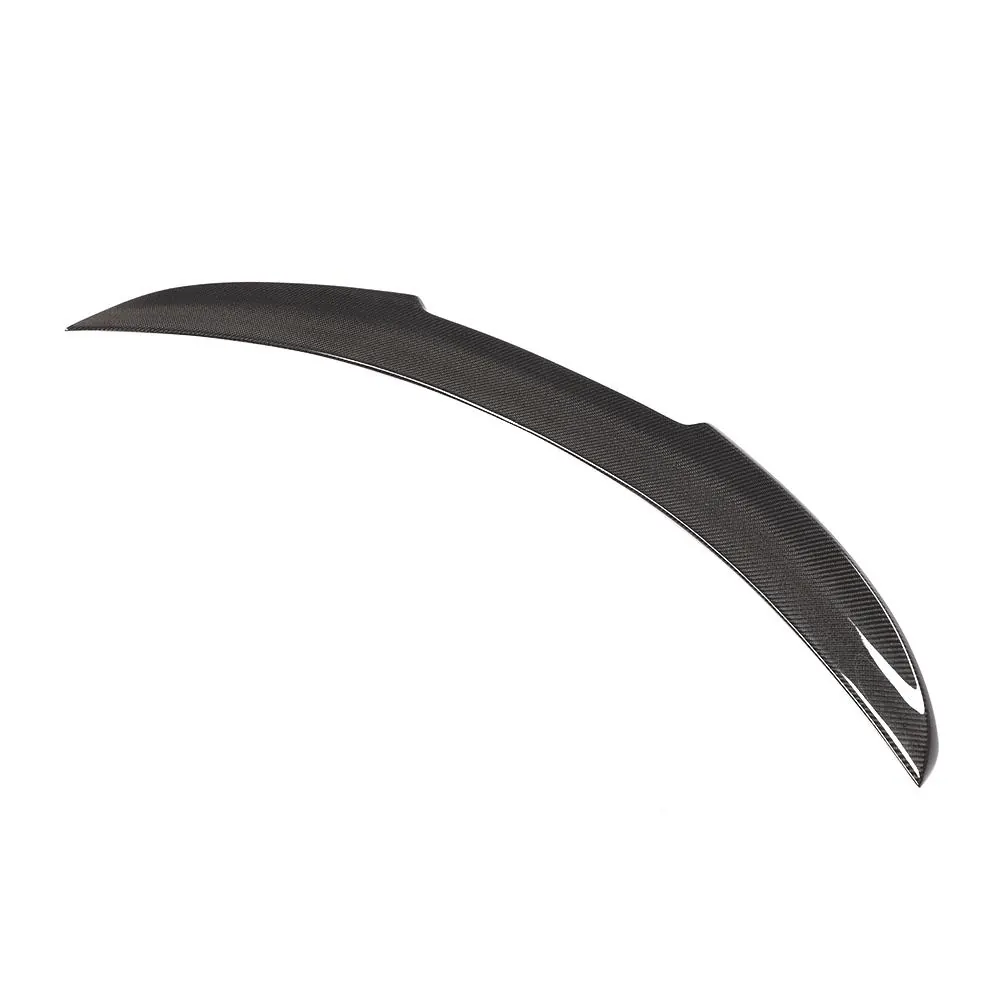
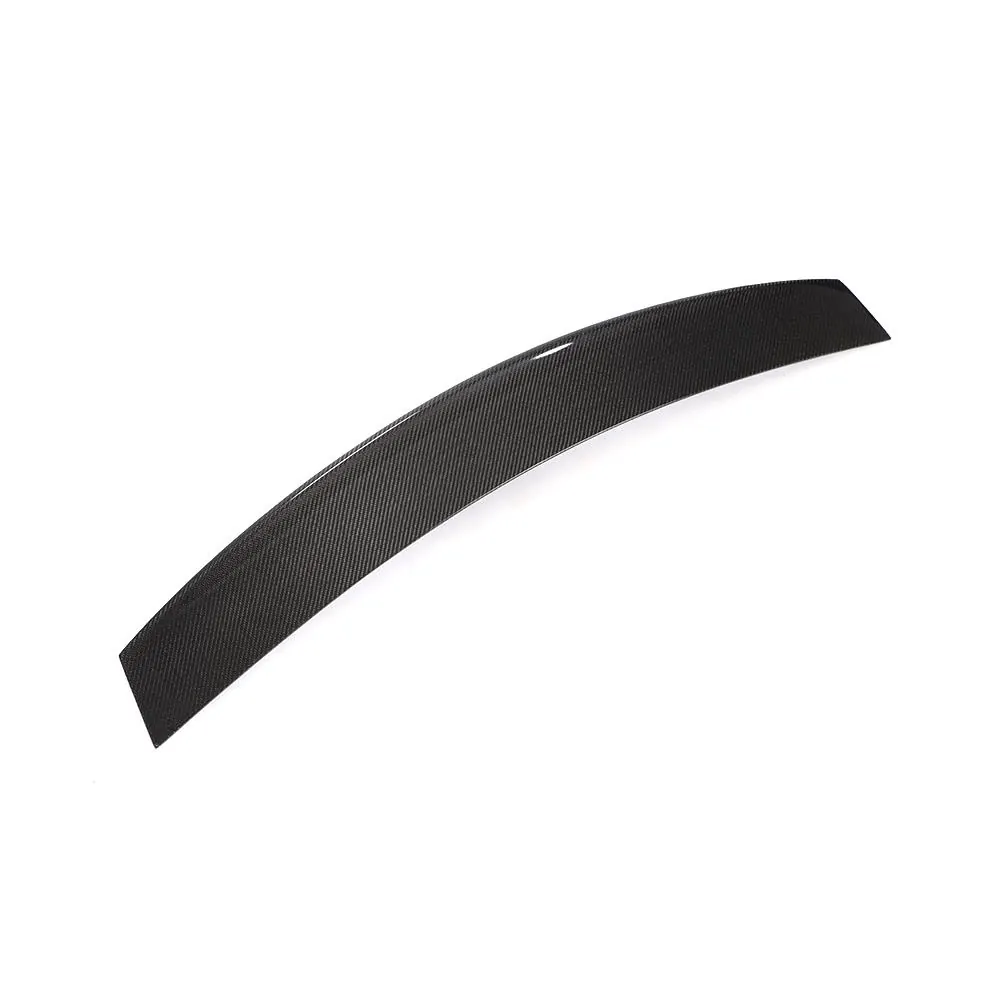
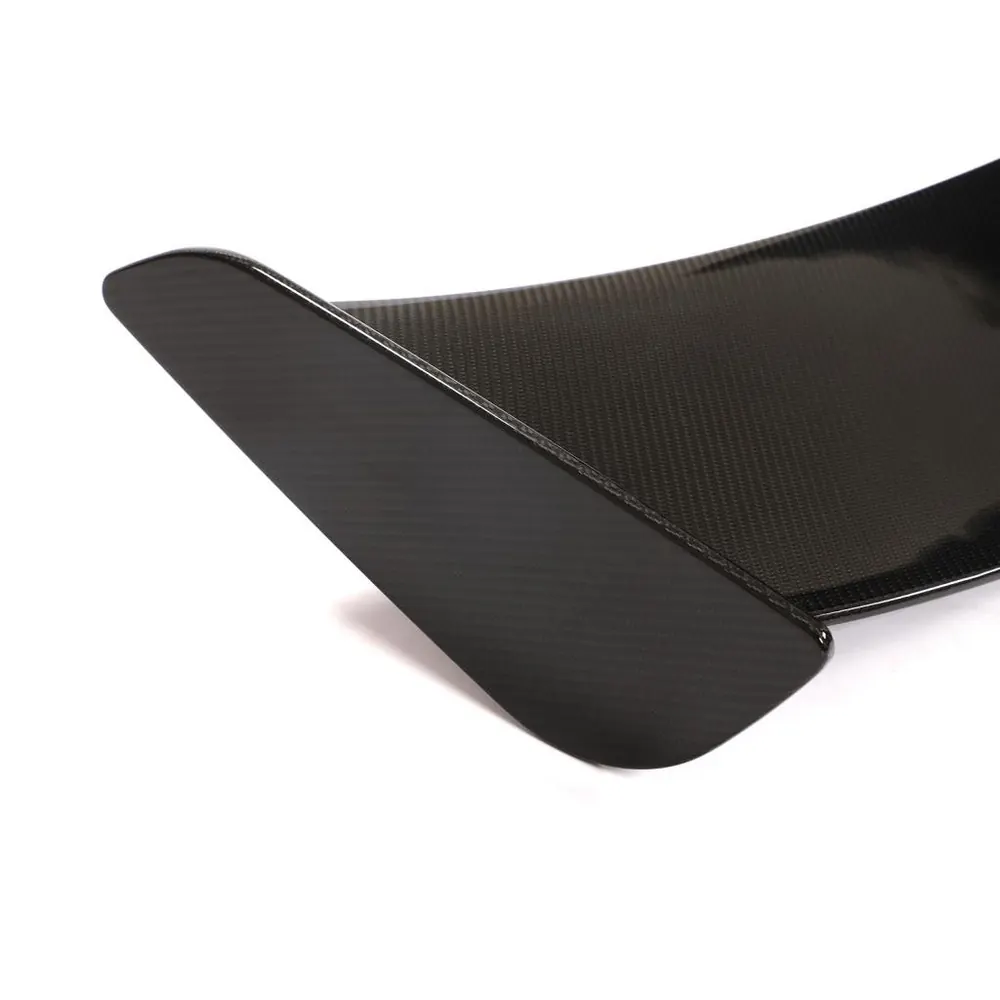
Four of them, as they sit on the shelf:
 Infiniti Q602016–2018 · $150
 Mercedes-AMG GT2015–2019 · $300
 McLaren 570S2015–2021 · $900
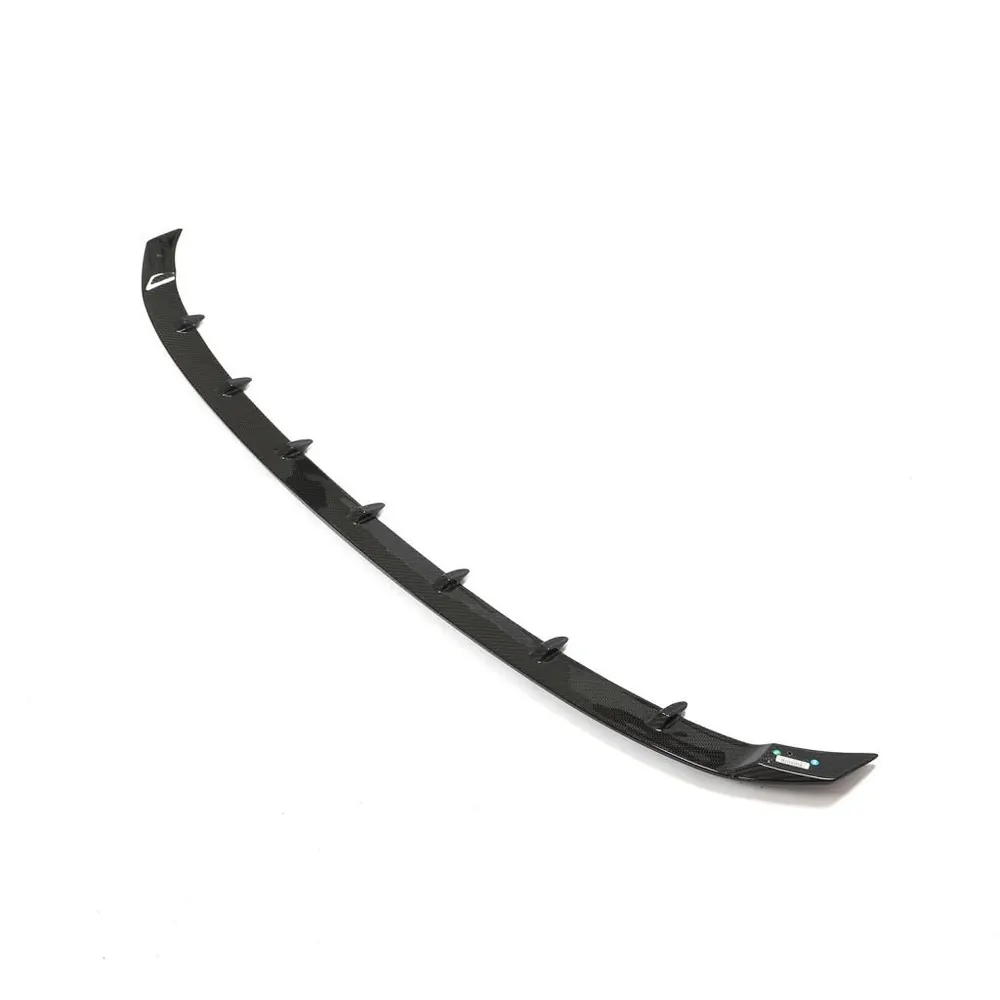 Bentley Continental GT2018–2022 · $1050
Every one of these is made to order in Foshan, shipped worldwide with tracking, and covered by a twelve-month warranty against manufacturing defects.
Living with it
Gloss carbon is not fragile, but the clear coat behaves like paint rather than like a bumper. Wash it with a soft mitt and a pH-neutral shampoo, keep abrasive polishes and machine compounds away from it, and rinse road salt and brake dust off when you rinse the rest of the car. A wax or a ceramic coat once a season is all it asks; the clear coat handles the UV by itself, and the wax is really there so dust stops bonding to the weave. Keep the original spoiler when you take it off. These come off the same way they went on, and a car that still has its factory part in a box is an easier car to sell.
What we will not do
We will not quote a downforce figure we have not measured. We will not describe a lip as a wing, or say a rear spoiler cures a nervous rear end. Five listings on the site are universal fit and the rest are tooled for one car; if yours is not tooled, we will tell you that instead of selling you the closest shape. And if you want a spoiler fitted over an old residue line, we will ask you to clean it first, even though it makes the job longer.
Custom, and the short version
Finish and weave are chosen at order time. Gloss 3K twill is the default; matte, satin, forged carbon, 6K twill, plain weave and a carbon-kevlar hybrid are all produced on request, along with a tinted clear coat in red, blue or yellow. Logo application under the clear coat and badge cut-outs we do on most parts. Matching the carbon already on the car is one of the most common reasons people write to us — send a photo and we will post you samples of the weave.
And if you would rather not spec it, send the car and the look and our designers will draw the shape — height, sweep, finish — before a panel is laid up.
Every photo on this page comes from our own listings, shot by us in Foshan. See the carbon fiber spoilers we make →